
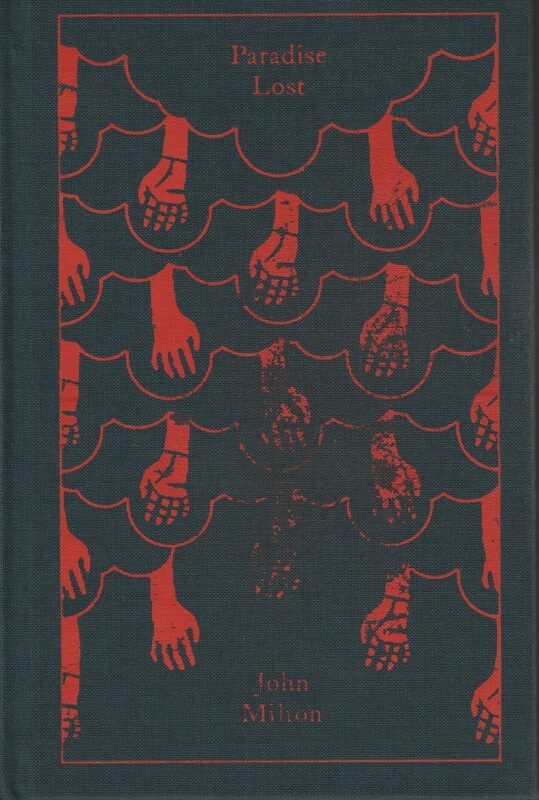


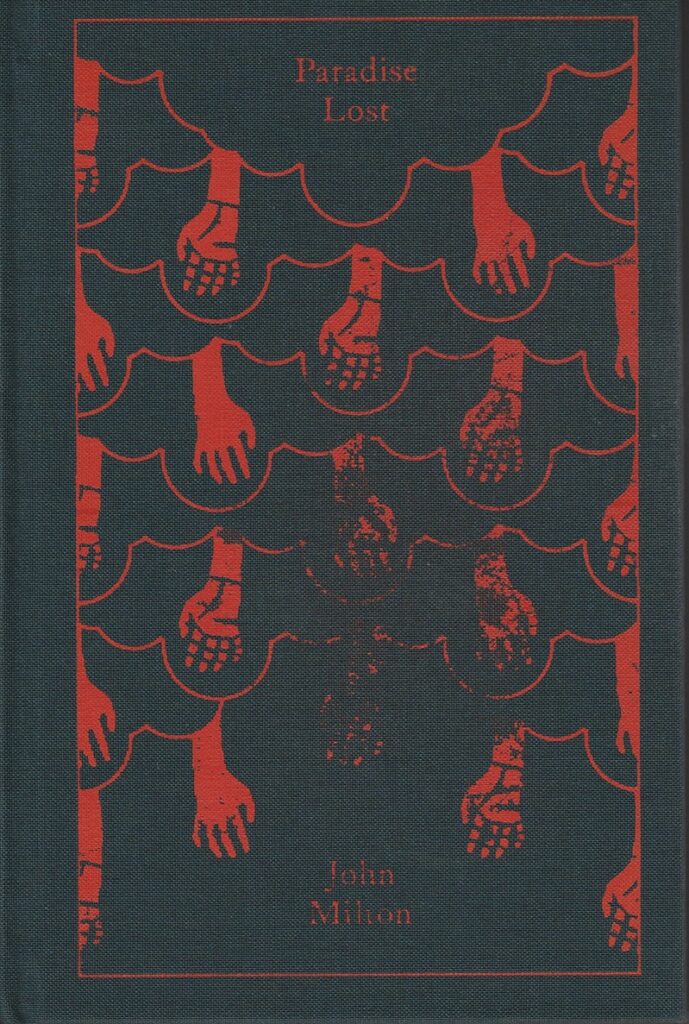
Title: Paradise Lost
Author: John Milton
Written: 1667
Pages: 453 Pages
Structure: 12 “Books” each of about 600 to 1,000 verses
The Details
“Paradise Lost” by John Milton is a rich masterpiece of epic poetry written in the 1660’s.
It retells the ancient myths of the war of the angels, the creation of the world, the transgression of humans against their creator, and the redemption of the transgressors.
The poetry is sublime, and the politics / philosophy is deliciously subversive.
Milton uses many of the poetic devices of Homer and Virgil in his writing: intricate and beautifully crafted similes and metaphorical imagery, referring often to the legends of ancient Greece.
Things to look out for.
Milton intended to craft this work in the epic style of Homer and Virgil. He says so in the opening lines of the book:
The measure is English heroic verse without rhyme, as that of Homer in Greek, and of Virgil in Latin; rhyme being no necessary adjunct or true ornament of poem or good verse, in longer works especially, but the invention of a barbarous age, to set off wretched matter and lame metre; graced indeed since by the use of some famous modern poets, carried away by custom, but much to their own vexation, hindrance, and constraint…
Therefore we expect find the hallmarks of epic poetry:
Invocation. Milton invokes his muse:
Sing, Heav'nly Muse, that on the secret top
Of Oreb, or of Sanai, didst inspire
That shepherd, who first taught the shosen seed,
In the beginning how the heav'ns and earth
Rose out of Chaos....
...And cheifly thou, O Spirit, that dost prefer
Before all temples th' upright heart and pure,
Instruct me, for thou know'st;...
Unlike Homer and Virgil, Milton invokes the holy spirit as his muse. It seems to be claiming higher authority than his Greek and Roman predecessors because (as any believer will assert) his myth is “true”.
In Media Res. Like all epics, the story starts in the middle of things. We find Lucifer cast down from heaven after his defeat in the ancient angelic battle. Eventually the story will flash back to the time before the battle, but at the start, Milton throws us into the thick of it. This is always a compelling way to start a story
Similes. Although not as frequent as the ancient epics, Milton still treats us to some vivid epic similes. Here’s one of Lucifer being caught by the angels Ithuriel and Zephon, trying to whisper some seditious thoughts into Eve’s ear while she slept:
...As when a spark
Lights on a heap of nitrous powder, laid
Fit for the tun, some magazine to store
Against a rumour'd war, the smutty grain,
With sudden blaze diffus'd, inflames the air:
So started up in his own shape the Fiend.
Epithets. Like Homer and Virgil before him, Milton uses recurring imagery to describe people and things in the story.
In a sunrise reminiscent of Homer’s “Rosy fingered Dawn” we read “Now Morn, her rosy steps in the eastern clime Advancing, sowed the earth with orient pearl,”
Satan is referred to as “The Prince of Darkness” – this was the first time in literature that this term was used. It’s never mentioned in the Bible. It seems to have struck a chord. Even today we we’re very familiar with this epithet for Lucifer.
The creator is given the epithet “Almighty Father”.
Gods. Although we’re now dealing with the Christian pantheon, instead of the Greek or Roman collection of deities, the characters are still capricious, vindictive, and sometimes heroic.
When God discovers that Adam and Eve have eaten the forbidden fruit of the Tree of Knowledge, and have repented, he is worried they might also eat the fruit of the Tree of Life, which gives immortality, so he commands his angel to prevent them.
As if evicting them from the garden, and curtailing their lifespan is not enough, he spitefully makes the sun hotter, the winter colder, the winds more tempestuous, and the oceans to “roll with terror” – just to punish them a bit more. Milton’s creator is mean.
By contrast, Lucifer is presented as tragically heroic. When the host in Pandemonium decides that one of them must make a perilous journey to Earth to corrupt humanity, none of the fallen angels want to do the task, so Lucifer takes the task upon himself.
A similar scene is played out in Heaven, where God says that someone must sacrifice themselves to redeem fallen humanity. None of the angels want to do it. Eventually the Son volunteers for that task.
Favouirite Parts
After being cast down from heaven, Satan considers his plight:
"The mind is its own place, and in itself
Can make a Heav'n of Hell, a Hell of Heav'n.
What matter where, if I be still the same?
...Here at least
We shall be free...
Here we may reign secure, and in my choice
To reign is worth ambition though in Hell:
Better to reign in Hell, than serve in Heav'n."
Milton’s Satan is intelligently complex, a charismatic and interesting leader, who is awestruck by the sheer beauty of Eden.
When he first beholds the beauty of Eve he is overwhelmed. Temporarily separated from his own evilness, he becomes “stupidly good” for a while and has to use every ounce of strength to remember why he was in the garden disguised as a serpent.
Adam says something beautiful when he discovers Eve has eaten the forbidden fruit. He realises she is doomed and chooses her over Paradise. He says
"Certain my resolution is to die;
How can I live without thee, how forgo
Thy sweet convérse and love so dearly joined,
To live again in these wild woods forlorn?
Should God create another Eve, and I
Another rib afford, yet loss of thee
Would never from my heart; no no, I feel
The link of nature draw me: flesh of flesh,
Bone of my bone thou art, and from thy state
Mine never shall be parted, bliss or woe."
I find the Humans and Fallen Angels more relatable. I understand why they acted as they did, and could imagine myself acting the same way.
This is a wonderful book, with powerful imagery, unsettling questions, and masterful use of the English language.
I love it.