
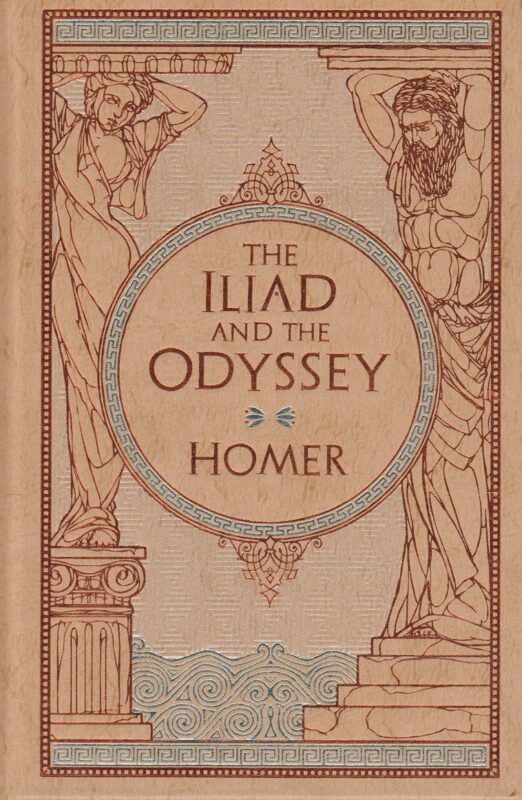


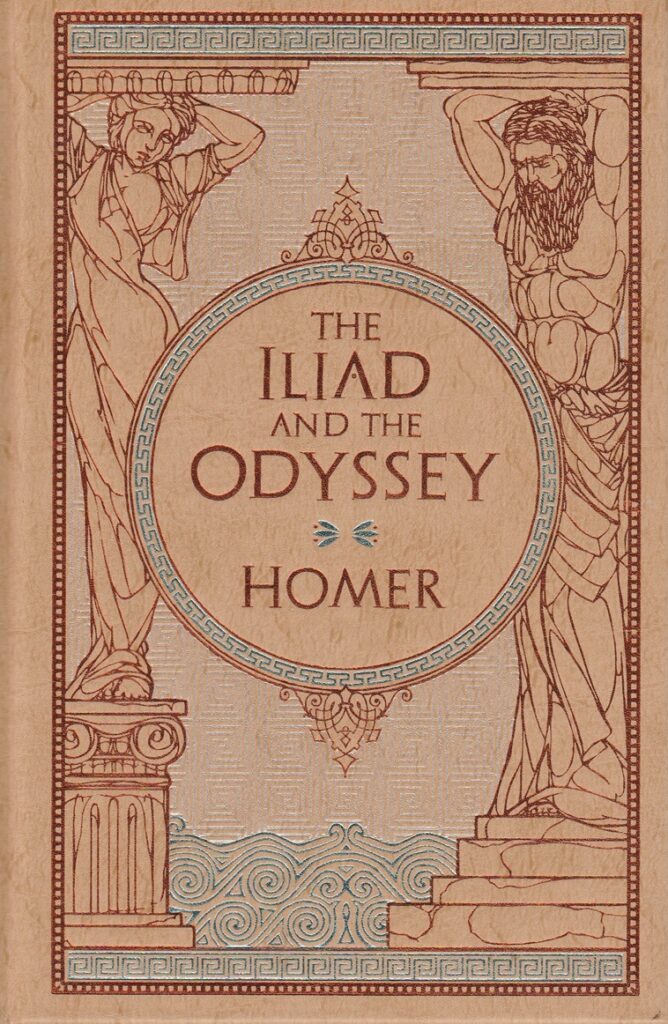
Title: The Iliad
Author: Homer
Written: circa 700 BCE
Translator: Samuel Butler, 1898
Pages: 407
Structure: 24 “books”, each about 400 to 900 lines (10 to 20 pages) long.
The Details
The Iliad is the greatest book I have read. It’s hard work, but worth it. This epic of passion, bitterness, heartache and mercy are unparalleled in any literature or religious works available today. Any.
It’s not really about war. Neither the Trojan Horse, nor the launching of a thousand ships are part of the book. It’s a glimpse into the lives of relatable people during a brief period in that conflict.
I wish I had read it earlier.
This was my first attempt at reading one of “The Classics”. If you’re not used to classics, here’s some things to look out for, which add to the enjoyment of the reading experience.
Things to look out for
Homer uses some classic techniques in his epic, that have become the standard for others wanting to write a good epic. These ideas crop up regularly when future writers attempt to imitate Homer:
Invocation. Homer recognizes that he is telling an important story, and admits that as a mortal, he needs divine help. So he invokes the Muse at the start, praying for help to tell the story:
Sing, o goddess, the anger of Achilles, son of Peleus, that brought countless ills upon the Acheans…(Book 1)
This invocation happens occasionally throughout the book, usually at the start of a key scene.
I enjoyed this because it captured my attention. “Hey this is important. The author has asked the Muse to help him describe it.”
“In media res” (In the middle of things). The story doesn’t begin at the start, but in the middle. The author assumes the reader is familiar with the history leading up to the events in the book. We don’t read about the Judgement of Paris, The Apple of Discord, The Launching of a Thousand Ships, Oddyseus Feigning Madness, etc. These are all assumed. We are dropped into the middle of the ninth year of a ten year-long war.
Epithets. At first this feels like repetition, but it adds to the magic of the experience.
The story was originally performed live, from memory, in front of an audience. It was intended to be heard, not read. The repetition would have helped with the recital and reminded the audience of the nature of the characters. So we have:
- “Swift-footed Achilles”
- “Rosy-fingered Dawn”
- “Poseidon, the Earth-Shaker”
- “Agamemnon, shepherd of the people”
- “Hector, tamer of horses”
- “Menelaus, master of the war-cry”
When I encountered these descriptions, it helped add to my mental imagery of a scene.
…and when the child of morning, rosy-fingered Dawn, appeared they again set sail…(Book 1)
Similes. Homer uses some of the most vivid similes I have ever seen. The story is full of them. Some of them continue for paragraphs. If you’re not used to it, you can get lost in the simile and forget what the author was talking about. But the intent is to establish clear imagery in the reader’s mind as a key event happens.
As when the waves run high before the blast of the south wind and break on some lofty headland, dashing against it and buffeting it without ceasing as the storms from every quarter drive them, even so did the Achaens rise and hurry in all directions to their ships.
They almost always take the form of “As when ….. some powerful image….. even so did …. some event happen.”
This is unusual. We’re used to similes. As Dickens wrote “Morley was dead. Dead as a door-nail”. Usually the simile is simple and short. But Homer is the opposite. He gives you the image first. Many lines of imagery. And then he’ll tell you what happened that was similar to this imagery/ So its necessary to first see the image mentally, before reading the actual thing that took place.
Gods. Homer’s gods are honest: vindictive and capricious. They change their minds, take revenge, get jealous if they’re not getting enough attention, and they take sides in battle.
There is no gas-lighting platitudes that modern believers might expect, no gods expressing their unconditional love for mortals. They’re motivated by self interest.
Hera, wife of Zeus, is opposed to the Trojans because she’s jealous at the son of Troy’s King Priam, Paris, who judged Aphrodite to be more beautiful than her. She’s also opposed to Priam’s cousin Aeneas because she knew he posed a threat to her favourite city, Carthage
Similarly, Aphrodite supports Paris because he judged her the most beautiful of all women, so she protects him in battle, covering him in clouds, deflecting arrows, and even physically removing him from the battlefield when his life is endangered.
Poseidon, god of the Sea and Earthquakes, opposes Troy because King Priam’s father, Laomedon, did not pay a debt he owed to Poseidon when he build the city walls with Apollo.
The list is long, Homer’s audience would have been aware of these divine grudges while they listened to the performance. The rest of us need some extra information to help make things clearer. I read Stephen Fry’s excellent book Troy around the same time I read Iliad. which helped give a clearer picture of the causes of many of these grievances.
Favourite Parts
There are two outstanding places that I’d like to mention because they highlight Homer’s mastery.
Hephaestus forges new armour for Achilles.On the eve of his battle with Hector, Thetis, mother of Achilles, asks the god Hepahaestus to make new armour for him.
Hephaestus, the illegitimate son of Zeus, was cast down from Olympus by jealous wife Hera. His injuries caused him to become lame. Thetis cared for him during this time, and Hephaestus agreed to forge the armour out of gratitude to Thetis.
What follows is five pages of wonderful text describing how Hephaestus forged the armour, including details of the artwork he wrought on the shield. Here’s a sample:
He wrought the earth, the heavens, and the sea; the moon also at her full and the untiring sub, with all the signs that glorify the face of heaven – the Pleiades, the Hyades, huge Orion, and the bear…
He wrought also two cities, fair to see and busy with the hum of men. In the one were weddings and wedding feasts, and they were going about the city with brides whom they were escorting by torchlight from their chambers…
Meanwhile the people were gathered in assembly, for there was a quarrel, and two men were wrangling about blood money…
This isn’t just a picture, it’s a magical hologram depicting the history of the world. I could imagine this hobbling god, at his forge, beating a wondrous shield into shape, and delicately inscribing artwork that came to life as he created it.
This poetic device was so powerful and successful that Virgil later borrowed it in Aeneid, when Vulcan (Roman equivalent of Hephaestus) forges armour for Aeneas as a favour for Venus (Roman equivalent of Aphrodite), and inscribes it with similar moving prophetic imagery of the future of Rome.
The final conversation between Priam and Achilles. This is one of the most emotionally charged pieces of writing I have ever seen. Hector is dead, his body has been desecrated by Achilles, who is unable to let go of his anger. Priam, now an old man, secretly steals to Achillies’ tent at night, to ask for the return of his son’s corpse.
“Think of your father, O Achilles like unto the gods, who is such even as I am, on the sad threshold of old age. It may be that those who dwell near him harass him, and there is none to keep war and ruin from him. Yet when he hears of you as being still alive, he is glad, and his days are full of hope that he shall see his dear son come home to him from Troy, but I, wretched man that I am, had the bravest in all Troy for my sons, and there is not one of them left….
…Hector, him who was alone left, him who was the guardian of our city and ourselves, him have you lately slain. Therefore I am now come to the ships of the Achaeans to ransom his body from you with a great ransom. Fear, O Achilles, the wrath of heaven! Think on your own father and have compassion upon me, who am the more pitiable, for I have steeled myself as no man has ever yet steeled himself before me, and have raised to my lips the hand of him who slew my son.”
I sill get teary reading this. The father kisses the hand of the man who killed his son, and asks him to think of how his own father would feel.
After ten years of war, after all of the anger and destruction that had transpired before this meeting, after the desecration of Hector’s body, after all of the rage-filled boasts, Achilles’ vitriol is becalmed. He lets go of his bitterness and agrees to Priam’s request.
…the heart of Achilles yearned as he bethought him of his father. He took the old man’s hand and moved him gently away. The two wept bitterly Priam, as he lay at Achilles’ feet, weeping for Hector, and Achilles, now for his father and now for Patroclus, till the house was filled with their lamentation.
This is more than the final stages of a war, it’s a profound tableau of the pain of anger, and the power of letting go of that anger. I think anyone who has ever felt anguish can relate to this scene.
About this translation
The original work was written as an epic poem with a regular meter and verse length (dactylic hexameter). This translation is in prose, which makes it easier to read. The downside is that you don’t get the poetic “feel” of the story.
It is written in formal Victorian English, which adds to the gravitas of the text.
The other downside is that there is no verse numbering, like with other translations of the work, so it’s difficult to lookup specific reference like you would in Chaucer or Shakespeare.
The upside of this edition is that it also comes with the Odyssey – a “sequel” to this story. The book is beautifully bound with gilt pages and a cloth bookmark. It has a luxurious feel to it.
Conclusion
Read Homer slowly.
At times, read it out aloud, and let his imagery and understanding of the human condition soak in.
Don’t let the size of the book intimidate you. This book is worth it.
If you need some help / clarification as you read some parts, look it up. Now is the best time in history to read classics. There is so much information available online.
Iliad was worth the effort. The imagery will stay with me for the rest of my life.