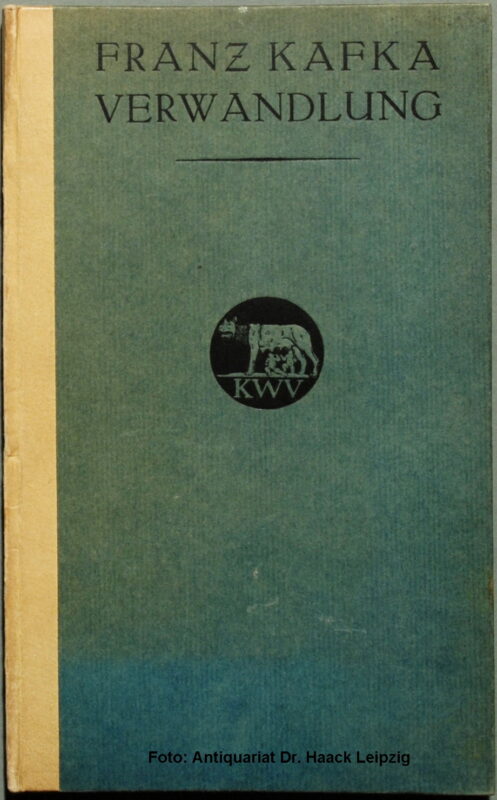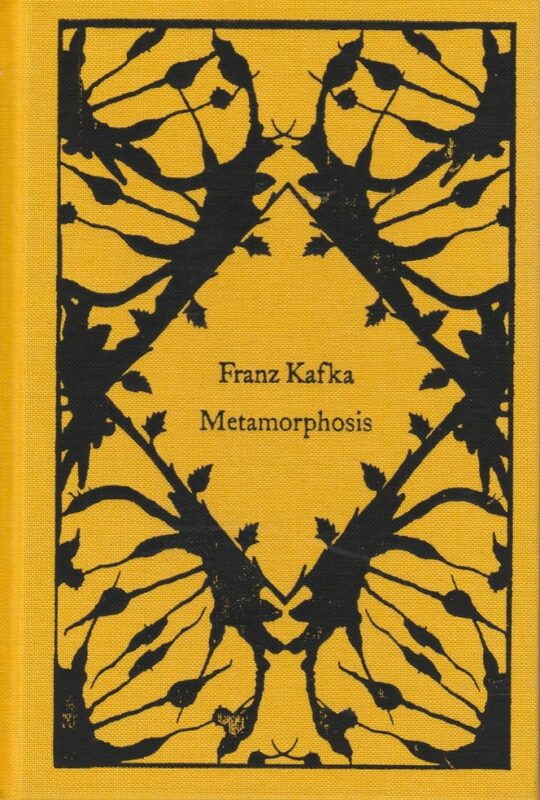


Title: The Metamorphosis (Die Verwandlung)
Author: Franz Kafka
Written: 1915
Translator: Michael Hofmann, 2007
Pages: 77
Structure: 3 chapters.
“When Gregor Samsa awoke one morning from troubled dreams, he found himself changed into a monstrous cockroach in his bed.”
What an unusual way to start a book! This strange, funny, sad, absurd, and alarming book is a powerful insight into what it’s like to live in a world where things can go wrong through no fault of our own, and we find ourselves rejected out of fear, and when we’re no longer useful.
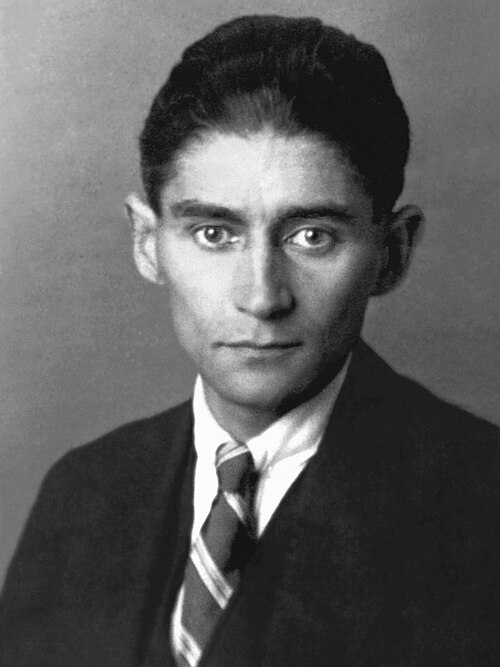
“The Metamorphosis” tells the story of traveling salesman, Gregor Samsa, who has been working to support his family and pay off a debt incurred by his parents after a business failure. He hasn’t taken a day off work in over five years, and rises every day at 4:00am to catch the train to the office. It’s a job he dislikes, but one he tolerates out of loyalty to his parents.
He lives in a small apartment with his father, mother and sister,
One morning he awakes to find out he has been transformed into a giant cockroach, and spends the next half hour trying desperately to get out of bed.
At first this seems comically absurd, until you realize that Gregor has no concerns about his condition; his main worry is making sure he gets to the office on time, and is able to pay back his parents’ debt:
“Well, I haven’t quite given up hope; once I’ve got the money together to pay back what my parents owe him – it may take me another five or six years – then I’ll do it, no question. Then we’ll have the parting of the ways. But for the time being, I’d better look sharp, because my train leaves at five.”
His family knocks on his bedroom door, worried that he hasn’t left for work. The chief clerk from the office visits to find out why he is absent. Eventually Gregor struggles to unlock his bedroom door, pokes his head out of his room and shocks everyone there, including the chief clerk, who flees the house in terror.
The story explores the “metamorphosis” not only of Gregor, but of his family who gradually move from shock at Gregor’s appearance to fear, then anger, disgust and finally hatred.
At the same time Gregor’s attitude transforms from concern for his family, to defiance, and finally despair.
Each member of the family is forced to work, since Gregor can no longer provide for them, and Gregor overhears a conversation one evening about a “nest egg”, which reveals that the family’s financial situation is not so dire as Gregor was lead to believe.
“The surplus funds might have been used to pay down his father’s debt to the director, thereby bringing closer the day when he might quit this job, but now it seemed to him better done the way his father had done it.”
Although this nest-egg is clear evidence of how his parents have been exploiting him, Gregor suppresses his own judgement and merely decides that they know best.
Eventually, Gregor tries to leave the room in which his family has imprisoned him. His father stamps his feet and treats him like a bug, and throws an apple at him. The apple breaks Gregor’s shell, injuring him – an injury which eventually proves fatal.
Gregor dies, and his family is delighted to be rid of him. They decide to take a break from work because “they stood in dire need of one”.
This book made me to think about the roles we force upon ourselves:
It’s obvious Gregor didn’t need to work in a job he hated. His family had money, and were also able to work. Gregor simply fulfilled a role, and his family played along. How often do we force unnecessary roles upon ourselves?
It also made me think about how precarious our lives are:
A man is transformed from a responsible breadwinner to an object of disgust through no fault of his own. The people closest to him end up being ashamed of him, rejecting him and eventually killing him. Gregor receives no credit for his past service. He’s no longer of any use, he’s no longer understood, and his family decide their lives would be better if he were no longer around.
But the most alarming observation is about the relationship between fear, anger and violence.
When Gregor is transformed into a cockroach, his family can no longer understand what he’s saying. His appearance and speech are foreign to them. He scares them. He disgusts them. Eventually his mere existence angers them, and they act violently towards him.
This often happens in our society. Think about how we treat cultural groups that speak a different language, who look different from us, or behave in ways we don’t understand. The mob is manipulated to feel fear, disgust and anger, and this anger often transforms into violence. In fact it’s often impossible to commit acts of violence unless you’re first roused into a state of anger.
This book can be read in one short sitting. It’s easy to read – Kafka uses simple language. And it’s not overtly confronting. It just seems like a strange tale of a magical transformation. The uneasiness comes afterwards when you think about what you’ve read.
“The Metamorphosis” is subversive, but in a good way. It forces me to think about the things I force myself to do unnecessarily. It makes me appreciate the life I have, which could quickly be taken away from me. And it helps me to be more compassionate to those people who are different from me.
It’s well worth reading.