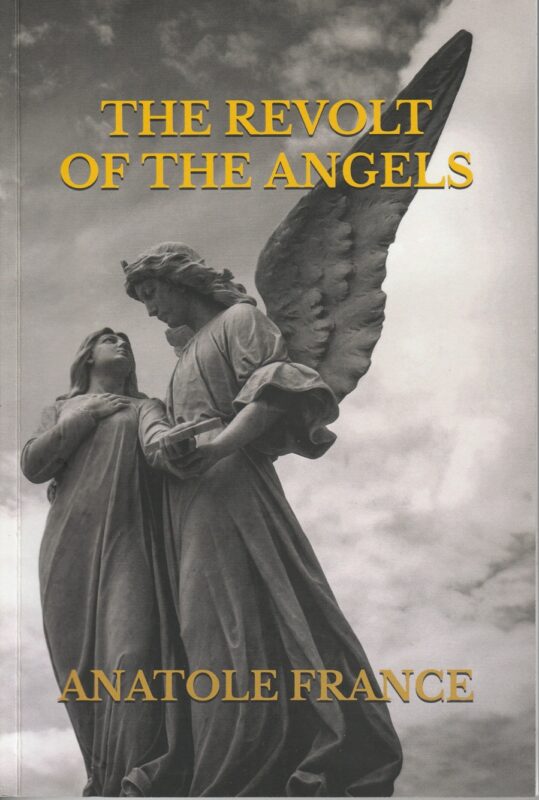


Title: The Revolt of the Angels
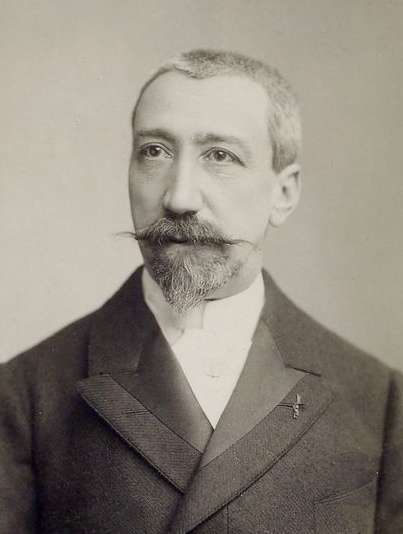
Author: Anatole France
Written: 1914
Translator: Emillie Jackson (1924)
Pages: 156
Structure: 35 chapters.
This fascinating novel is a modern retelling of the classic christian “War in Heaven” myth, set in 1914 Paris. It follows a guardian angel, Arcade, who after discovering a love for reading books about Theology and History, comes to the realization that the god in heaven that he has been serving since before time is actually a malevolent impostor.
The story begins in the immense library of a wealthy french family, where priceless books have started to go missing, turning up in strange places. The librarian is driven almost to insanity until the author reveals that the angel Abdiel, who is known on earth as “Arcade” has been hungrily reading these books every night:
“I have delved deep into Oriental antiquities and also into those of Greece and Rome. I have devoured the works of theologians, philosophers, physicists, geologists, and naturalists. I have learnt. I have thought. I have lost my faith.
Arcade is the guardian angel of young aristocrat Maurice D’Esparvieu, who is shocked to see this divine apparition in his apartment. Also shocked is Mme Gilberte des Aubels, a young woman with whom Maurice has been conducting a secret affair.
What shocks Maurice most is that because Arcade has decided to rebel against Heaven, he can no longer be Maurice’s guardian angel. As someone steeped in catholic tradition, Maurice is horrified when he realizes he’ll no longer have an angel to secretly watch over him and presses Arcade for an explanation. Why has Arcade lost his faith in God?
” I think Him limited, even very limited. I no longer believe Him to be the only God. For a long time He did not believe it Himself; in the beginning He was a polytheist; later, His pride and the flattery of His worshippers made Him a monotheist. His ideas have little connection; He is less powerful than He is thought to be. And, to speak candidly, He is not so much a god as a vain and ignorant demiurge. Those who, like myself, know His true nature, call Him Ialdabaoth.”
Arcade realizes the traditional god of heaven is an imposter and despot, who cruelly imposes his will on the world by fear and military force.
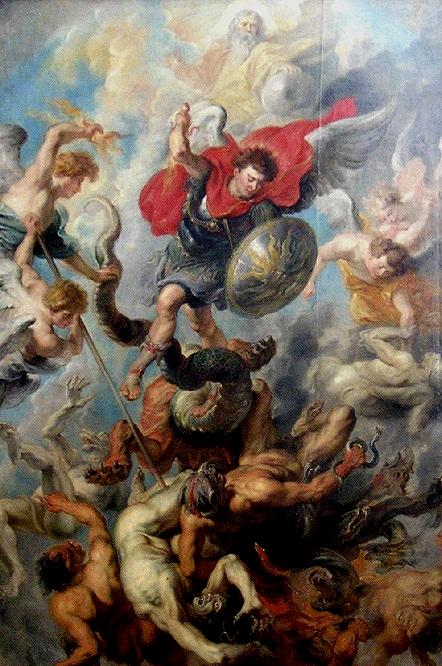
Thus Arcade joins a growing number of angels on Earth who prepare an assault on heaven.
There are references to Milton’s Paradise Lost and Dante’s Divine Comedy including that wonderful quote “Better to reign in hell that serve in heaven.”
As the story progresses, we are introduced to other angels: Theophilé, who earns money by giving music lessons to children and playing the violin in dancing saloons; the beautiful and brilliant former archangel Zita; the huge and powerful cherub Istar; and the ancient yet musical Nectaire.
As part of the plans for war, the angels need to raise money to purchase arms. They seek out the banker Max Everdingen, also a former angel who was once the guardian of the treasuries of Heaven, but who decided he could have more fun as a banker in France:
…casting his eyes down from the height of the firmament upon France, he saw that this country, under the name of a Republic, was constituted as a plutocracy and that, under the appearance of a democratic government, high finance exercised sovereign sway. untrammelled and unchecked.
Henceforth life in the Empyrean became intolerable to him. He longed for France as for the promised land, and one day, bearing with him all the precious stones he could carry, he descended to earth and established himself in Paris
At first Everdingen is horrified when he discovers the revolution plot, because he sees it as “both criminal and mad to attack the most admirable thing in the world, the thing which renders earth more beautiful than heaven – Finance”. But eventually he realizes the revolutionary angels have the best chance of victory, and decides to support them.
At times the story appears comical. Books float down stairs born by invisible hands; former angels keep moth-eaten wings in a closet; revolutionaries gather in smoky back-rooms of seedy bars. But under the surface the novel takes a serious look at the ideas of good and evil, the use of power, and the atrocities committed upon humans throughout history in the name of religion.
As part of the revolutionary preparations, a policeman is killed and several people injured in an explosion. The author starts to raise faint doubts in our mind about the purity of the revolutionary cause. Maurice confesses:
“I used to think that a murder was something very extraordinary. Well I was mistaken. It is the simplest, most natural action in the world.”
The rebel armies, nevertheless, are mustered and prepared for battle. The generals of the armies present themselves to Satan on the eve of the attack. “Come, lead us to victory”, they urge.
But Satan decides to think about it for a while, and as he considers his actions he sleeps and has a dream in which he foresees a massive battle in which he is eventually victorious. Ialdabaoth is cast down to Hell, and Satan is crowned as King of Heaven.
But the twist is that in the dream he sees that nothing changes. Although the person on the throne has changed, there is still suffering in the world; the new King of Heaven now regards suffering and death as “the happy results of omnipotence and sovereign kindness”; he condemns intelligence and curiosity as threats to his power.
And Satan awoke bathed in an icy sweat…
“God, conquered, will become Satan; Satan, conquering, will become God.
He realizes that even if he wins this battle, no good will come of it, and he decides not to fight.
He realizes he has the power. but doesn’t need to wield it.
And, the most powerful insight of all, he realizes that for us to conquer tyranny, we need to conquer ignorance and fear in ourselves.
I love this book. In it, Anatole France dismantles the fables of traditional religion. But he doesn’t argue for revolution. Instead he urges personal transformation. It’s simultaneously funny, political, philosophical and cautionary.
At 156 pages, it can be read in a day, and is well worth your time – regardless of your current religious disposition.