


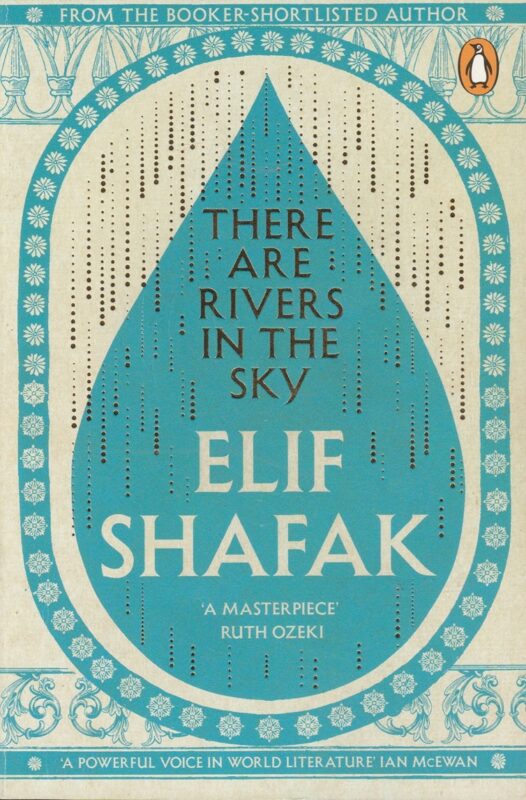
Title: There are Rivers in the Sky
Author: Elif Shafak
Published: 2024
Pages: 483 Pages
Structure: 5 parts, numerous chapters.
This is one of the most beautifully crafted books I have ever read. Often whilst reading it, I asked aloud “how can this woman weave something so perfectly intricate with words? What sort of magic is this?”
“There are Rivers in the Sky” is a story about three people, separated by time, heavily influenced by two rivers, The Tigris and the Thames, each of whom is touched in one way or another by the same single water droplet. It explores the delicate ways that each of us are connected to every other human, regardless of how long ago they lived, and how we can live good and meaningful lives despite the horrible cruelty that seems to exist everywhere.
“… two mighty streams flow through every human being: the good and the bad. Which course we choose to follow -through heart, spirit and mind – ultimately determines who we are. Some people will do everything they can to avoid hurting another person, even in the most desperate of situations, while others will inflict suffering as casually as if they were swatting away a fly.”
Arthur Smythe is born in the slums of Victorian England under an old oak tree beside the River Thames in 1840. Despite suffering extreme poverty, an abusive father and the scourge of a Cholera epidemic, he becomes an odd but brilliant young man with a photographic memory and a love for ancient Mesopotamia.
Narin is a nine-year-old Yazidi girl living beside the upper reaches of the Tigris River in Turkey in 2014 whose grandmother takes her into ISIS-occupied Iraq for a ritual that is central to her Yazidi faith.
Dr Zaleekah Clarke is thirty-something hydrologist living on a houseboat on the banks of the River Thames in 2018 who is in the process of going through a divorce, and navigating a difficult relationship with her rich but over-protective Iraqi uncle who has raised her since she was orphaned in a flood.
“Out of nowhere a memory surfaces – the words Uncle Malek uttered the day she had graduated from university with honours. I’m so proud of you… I want you to be very successful. Remember, people like us cannot afford to fail.
‘People like us’… immigrants, exiles, refugees, newcomers, outsiders…. Too many words for a shared, recognizable sentiment that, no matter how often described, remains largely undefined.”
Throughout the story we witness human brutality. Ranging from Assyrian King Ashurbanipal burning people alive 3,000 years ago, to modern day islamic extremists, committing acts of genocide in the Middle East.
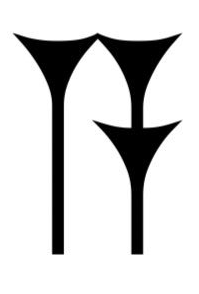
All of the protagonists in the book interact in some way with the same single water droplet. They are all connected in some way with the ancient story The Epic of Gilgamesh, and they all have a connection with the ancient Sumerian cuneform symbol for water:
The plot unfolds simultaneously in three different periods. Each story is like a river. If one reads the story carefully enough, it is possible to see the clever way Elif Shafak has woven each of the stories together. Sometimes it is simple things – a seagull briefly appears in one time period on one page, and magically appears on the following page in a different period. One character says “I am no poet, just a devoted reader” then we hear another protagonist say exactly the same words one hundred and fifty years later. An old blue Lapis Lazuli tablet on which is inscribed part of the Epic of Gligamesh shows up in four separate places separated by thousands of years.
These links are so cleverly threaded through the fabric of the story that I was stunned when I saw them – giving me goose bumps.
This book is rich with literary magic. The prose is exquisite. The imagery is powerfully evocative. And the message made me think about my own life, what is important, and what small but essential things might pass under my nose every day without notice.
Although Arthur says this to his friend, I think he could be saying it to all of us:
‘Life is full of the unexpected, my friend. As if we are walking in a river of mud, and we dare to dip our hands every now and then, searching for a button of hope, a coin of friendship, a ring of love. We are mudlarkers, all of us.’
“There are Rivers in the Sky” is not merely a story, but a rich experience. Perhaps that is the measure of a great book. I heartily recommend it.