
Title: The Left Hand of Darkness
Author: Ursula K. Le Guin
Pages: 304 Pages
Published: 1969
Structure: 20 Chapters and an appendix


Title: The Left Hand of Darkness
Author: Ursula K. Le Guin
Pages: 304 Pages
Published: 1969
Structure: 20 Chapters and an appendix


Title: The Lord of the Rings
Author: J.R.R.Tolkien
Published: 1955
Pages: 1567 Pages
Structure: 6 “Books” each containing between 9 to 12 chapters, plus 6 appendices and 3 indexes, published in 3 volumes
Tolkien’s “The Lord of the Rings” (LOTR) is a masterpiece – one of the greatest works of literature of the twentieth century. I have never read a book with so much depth in its world, and such broad and majestic themes.

Title: The Old Man and the Sea
Author: Ernest Hemmingway
Written: 1952
Pages: 99 Pages
Structure: No Chapters
How can such a short and simple story about an old man going fishing have so large an impact? Hemmingway’s “Old Man and the Sea” is one of the great stories of the twentieth century, earning the author the Nobel Prize for Literature shortly after it was published.

Title: The Grapes of Wrath
Author: John Steinbeck
Written: 1939
Pages: 476 Pages
Structure: 30 Chapters
This is one of the greatest books I have ever read. It’s a powerful masterpiece that made me rethink the meaning of words we use every day such as “justice”, “community” and “compassion”.

Title: One Hundred Years of Solitude
Author: Gabriel García Márquez
Written: 1967
Translator: Gregory Rabassa
Pages: 422 Pages
Structure: 20 Chapters
What a wonderfully unusual book!

Title: Beowulf
Author: Anonymous
Written: 750 CE
Pages: 213 Pages
Structure: An epic poem consisting of 3,182 lines
Beowulf is a wonderfully strange book.

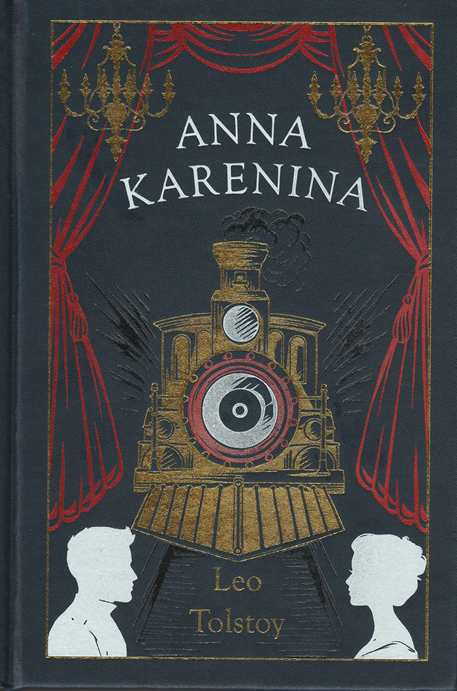
Title: Anna Karenina
Author: Leo Tolstoy
Written: 1878
Pages: 747 Pages
Structure: 7 “parts”, each split into about 30 chapters.
“Anna Karenina” by Leo Tolstoy is an overwhelming novel with huge themes. I feel dwarfed by it and can’t possibly do it justice by sharing my small thoughts.

Title: The Epic of Gilgamesh
Author: Anonymous
Written: 2,100 CCE
Pages: 119 Pages
Structure: 12 “Tablets”.
I will proclaim to the world the deeds of Gilgamesh. This was the man to whom all things were known; this was the king who knew the countries of the world. He was wise, he saw mysteries and knew secret things, he brought us a tale of the days before the flood. He went on a long journey, was weary, worn-out with labour, returning he rested, he engraved on a stone the whole story.

Title: Of Mice and Men
Author: John Steinbeck
Written: 1937
Pages: 106 Pages
Structure: 6 chapters, split into three “Acts” each consisting of two “Chapters”
“Of Mice and Men” is a heartbreakingly beautiful novella by John Steinbeck.

Title: Metamorphoses
Author: Ovid
Written: 8CE
Pages: 723 Pages
Structure: 15 “Books”. The total work contains about 250 myths.
“Metamorphoses” is an epic poem written by the Roman poet Ovid in the early first century.

Title: The Decameron
Author: Giovanni Boccaccio
Written: 1353 CE
Pages: 909 Pages
Structure: 10 “Days” each of 10 stories, with a “Prologue” at the start of the book
The Decameron is a wonderful book written in the 14th century by Giovanni Boccaccio.

Title: Paradise Lost
Author: John Milton
Written: 1667
Pages: 453 Pages
Structure: 12 “Books” each of about 600 to 1,000 verses
“Paradise Lost” by John Milton is a rich masterpiece of epic poetry written in the 1660’s.

Title: Crime and Punishment
Author: Fyodor Dostoyevsky
Written: 1866
Translator: David Mcduff (1991)
Pages: 671 Pages
Structure: 6 “Parts” and an “Epilogue”, each consisting of up to eight chapters
I feel dwarfed by this great work.
“Crime and Punishment” by Fyodor Dostoyevsky is full of powerful ideas, and I feel like I have merely scratched the surface, and that I have missed much.

Title: The Aeneid
Author: Virgil
Written: 19BCE
Translator: David West (1990)
Pages: 307 Pages
Structure: 12 “books”, each consisting of 800 to 900 lines or about 25 pages long
The Aeneid by Virgil is a wonderful book.
It tells of the epic journey of a group of Trojans who, led by Aeneas, leave their ruined city after a decade-long war, in search of a new homeland, as promised by the gods.
Despite the promise of a new homeland, Aeneas and his countrymen are forced to deal with brutal opposition brought about by the goddess Juno (Hera), who still bears a grudge against Troy, and fears the prophesy that the descendants of Aeneas will one day defeat Juno’s favourite city, Carthage.
Continue Reading
Title: The Canterbury Tales
Author: Geoffrey Chaucer
Written: circa 1380 CE
Translator: Neville Coghill (1951)
Pages: 504 Pages
Structure: A series of 24 “tales”, each with its own prologue
Chaucer’s “Canterbury Tales” is a delightful book.
Because it was originally written in Middle English, I decided to read a modern translation.

Title: The Divine Comedy
Author: Dante Alighieri
Written: 1308-1321
Translator: Michael Palma (2025)
Pages: 585
Structure: 3 “books”, each consisting of 33 or 34 “cantos”, each about 160 lines long
Dante’s “Divine Comedy” was one of the most difficult books I have read, but worth the effort.
It’s a 14th century account of one man’s descent to the depths of Hell, and his upward rise to the heights of heaven.
Continue Reading
Title: The Iliad
Author: Homer
Written: circa 700 BCE
Translator: Samuel Butler, 1898
Pages: 407
Structure: 24 “books”, each about 400 to 900 lines (10 to 20 pages) long.
The Iliad is the greatest book I have read. It’s hard work, but worth it. This epic of passion, bitterness, heartache and mercy are unparalleled in any literature or religious works available today. Any.
Continue ReadingThanks for visiting my blog about books.
At the start of 2025, I realized that I had not read as many books as I would have liked to, and decided to do something about it.
I feel like there are so many good books, and not enough time, so my strategy is to concentrate on the “great” works of literature. They might be difficult, but I figure reading is like riding a bike – riding up steep hills might be difficult at the start, but if you persevere, your legs get stronger, and you are able to visit more stunning places.
So it is with reading. I figure if I exercise the literary “muscles” in my head for a while, it might be easier for me to enjoy more good books, and (hopefully) gain a better insight into other times and places, and so have a better idea of what it means to be human.
Will it work? Who knows! But it’s worth trying.