


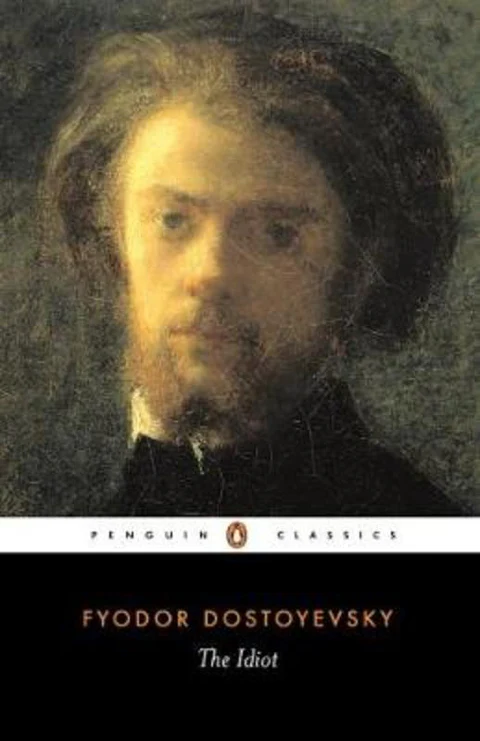
Title: The Idiot (Идиот)
Author: Fyodor Dostoyevsky
Written: 1869
Translator: David McDuff (2004)
Pages: 732 Pages
Structure: 4 “Parts”, each consisting of up to sixteen chapters
Is it possible to live a perfectly good and innocent life in a hostile society? If you did, what sort of effect would you have on the world? How would it affect you?
In “The Idiot”, Fyodor Dostoyevsky asks these painful questions by placing a simple but good man in the midst of the worldly selfishness of nineteenth century Russia, and then examining the consequences of the ensuing conflict.
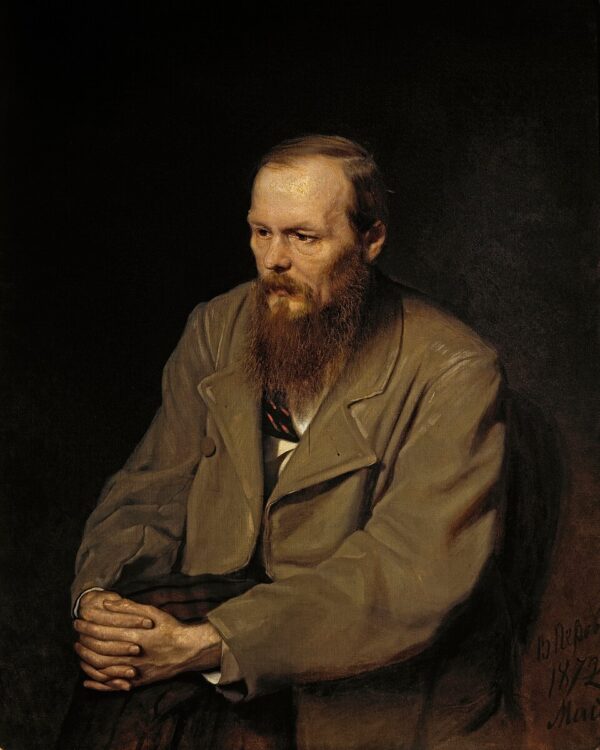
“Psychology” had not yet emerged as a formal experimental science until a decade after the publication of this novel. Nevertheless, it offers in-depth psychological analyses of a variety of different characters. These descriptions are so insightful that Dostoyevsky’s work was closely studied by later scientists, psychologists, and philosophers such as Sigmund Freud, Carl Jung, Friederich Nietzsche, and William James. Dostoyevsky broke new ground with his portrayal of the human psyche. The characters are so real that, as the reader, I found it impossible not to form strong emotional opinions about them.
We also read some vivid descriptions of what it was like to suffer from epilepsy. Like Dostoyevsky himself, the protagonist, Prince Lev Nikolayevich Myshkin, is an epileptic. The author knew this condition intimately, which gave him a unique position to realistically describe what it was like to suffer from a seizure.
The novel contains an exploration of the experience of the final moments of someone facing execution. What might go through their mind? What would they notice? How would they feel?
“For after all, perhaps the worst, most violent pain lies not in injuries, but in the fact that you know for certain that within the space of an hour, then ten minutes, then half a minute, then now, right at this moment your soul will fly out of your body, and you’ll no longer be a human being, and that this is certain; the main thing is that it’s certain.”
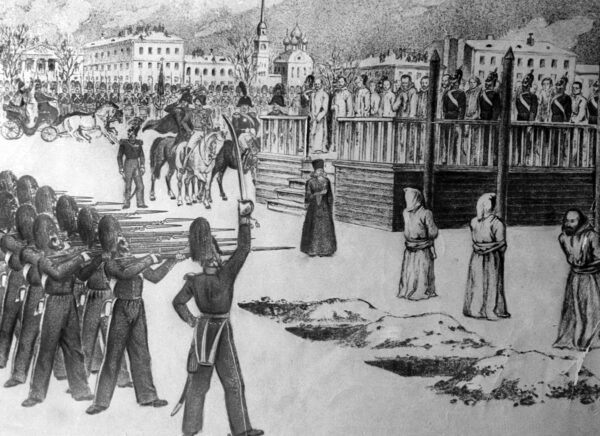
The author spoke from experience. He faced the firing squad in 1849. Unbeknownst to him it was a mock execution. He was tied in place, but at the last minute was given a reprieve. His death sentence was commuted to exile in Siberia. Right up until the last minute he thought he was going to be shot, and so when he writes of this experience, it is as one who has been through the ordeal. This event changed his life.
One of the other protagonists in the novel is Nastasya Filippovna Barashkova, who was groomed and sexually abused as a teenager. We witness her turmoil as her emotions move violently between anger, shame and self-loathing. We witness the contempt with which the elite members of Russian high society treat her, and the destructive passion with which some of the men in the novel pursue her.
The author contrasts this ongoing abuse against the compassion and respect that the Prince shows to her. Nastasya is both drawn to this kindness and afraid of it – feeling that as a “fallen woman” she does not deserve it.
I was amazed at the accuracy with which Dostoyevsky portrayed Nastasya. He understood the ongoing psychological damage inflicted by abuse. Nastasya becomes not just a character in a novel but a clear and believable analysis of the consequences of sexual abuse. It is no wonder that Freud and Nietzsche held him in such regard.
The author paints all his characters with the same careful precision:
Rogozhin is a passionate man who is uncontrollably in love with Nastasya and wants to possess her. Although he likes the Prince, he eventually tries to murder him out of jealousy. His unbridled emotions eventually cause him to commit a terrible murder.
Ippolit is a young nihilist who is in the final stages of tuberculosis, and is facing his imminent death. He is hungry for respect and love from others, but finds it in no one else but the Prince. As he approaches his death he grows increasingly cynical. Interestingly, although the Prince has profound philosophical differences with him, he treats Ippolit as an equal and doesn’t try to contradict him but finds common ground with him instead.
Lebedev is a sycophantic drunkard who tries to ingratiate himself with anyone he deems is superior to him.
Aglaya is a proud and beautiful young woman with whom the Prince slowly falls in love. She wants more than to be someone’s wife. “I don’t want to go traipsing around their ballrooms, I want to be of some use… I have decided to train to be a teacher.”
Ganya is clever, but greedy. Although he hates Nastasya, he offers to marry her in order to acquire her seventy-five thousand rouble dowry. When this proposal falls through he proposes to Aglaya. He is vain and mediocre.
There are many more characters than I can do justice to here.
Amidst the self-centredness of this world, Dostoyevsky places the Prince and lets us examine what happens.
I found the result exasperating. It is easy to feel antipathy towards some of these characters – they are so self-centred. I also was frustrated with the Prince, and often hoped he would have stronger boundaries when the others attempted to take advantage of him.
There is no happy ending to this story. Out of his compassion, the Prince gives everything. The others take it – but do not benefit, even suspecting him of ulterior motives, and the Prince is totally crushed. We’re left asking, “was this kindness worth it? Is it true that no good deed goes unpunished?”
And I think that the strange thing is, that Dostoyevsky hints that it is worth it.
Nastasya says to him “Farewell, Prince, it’s the first time I’ve ever seen a human being.”
Aglaya says: “You are more honourable than them all, nobler than them all, better than them all, kinder than them all, cleverer than them all! There are people here who are unworthy to bend down and pick up the handkerchief you’ve dropped… ”
And in his own thoughts, we hear the Prince say to himself “Compassion was the principal and, perhaps, the only law of existence for the whole of mankind.”
In my limited understanding, it seems that whether the Prince succeeds or fails is not the point. What matters more is who he is. He is true to his ideals, to his great cost, and we love him for it.