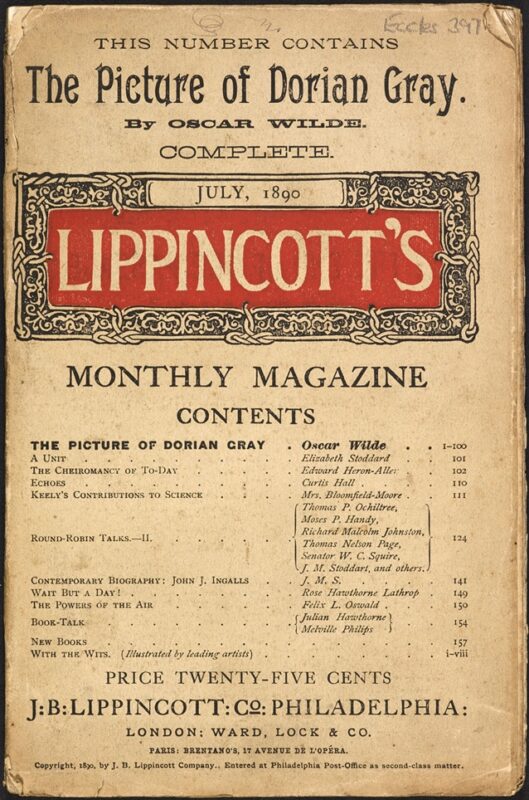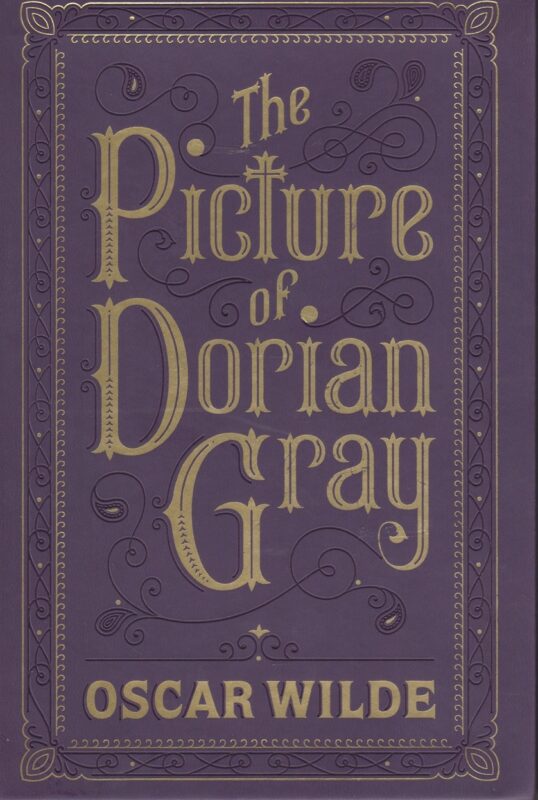
Title: The Picture of Dorian Gray
Author: Oscar Wilde (1854 – 1900)
Published: 1891
Pages: 214 Pages
Structure: 20 chapters
What if you could remain forever young, untouched by time and immune to the consequences of your actions? The Picture of Dorian Gray explores this unsettling possibility, revealing the terrible cost of a life lived without moral consequence, told with Oscar Wilde’s exquisite command of the English language.
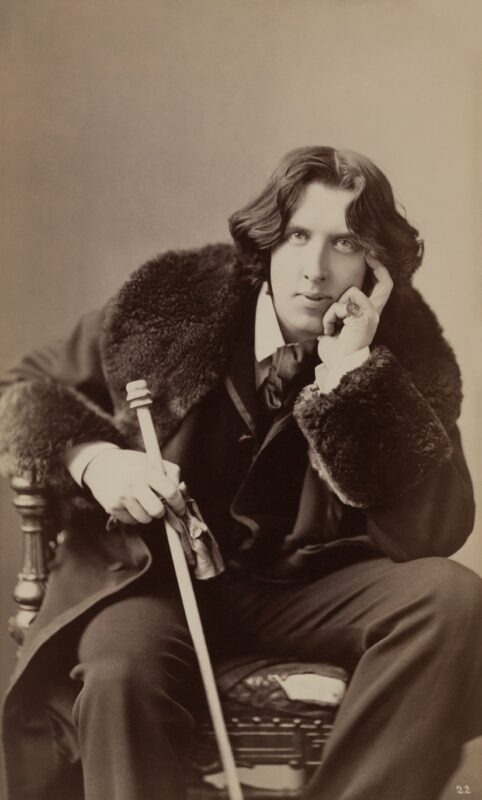
Oscar Wilde was a brilliant nineteenth-century Irish poet and playwright. “The Picture of Dorian Gray” was his only novel. On its publication the novel caused considerable scandal, with critics condemning it as immoral and decadent.
It tells the story of a beautiful and innocent young man, Dorian Gray, who has his picture painted by the artist Basil Hallward. During the sitting, Hallward’s cynical old friend Lord Henry Wotton is struck by Dorian’s youthful beauty and speaks with him.
Yes, Mr. Gray, the gods have been good to you. But what the gods give they quickly take away. You have only a few years in which to live really, perfectly, and fully. When your youth goes, your beauty will go with it, and then you will suddenly discover that there are no triumphs left for you… Every month as it wanes brings you nearer to something dreadful. Time is jealous of you, and wars against your lilies and your roses… Ah! realize your youth while you have it. Don’t squander the gold of your days, listening to the tedious, trying to improve the hopeless failure, or giving away your life to the ignorant, the common, and the vulgar… Live! Live the wonderful life that is in you! Let nothing be lost upon you. Be always searching for new sensations. Be afraid of nothing… For there is such a little time that your youth will last such a little time.
These words have a profound effect on Dorian, who has untill then been indifferent to his own attractiveness.
Hallward’s painting is a masterpiece, and artfully captures Dorian’s beauty. Dorian is stunned by the perfection in the painting. Under the influence of Henry’s previous words about youth, he has an unusual thought:
“How sad it is!” murmured Dorian Gray with his eyes still fixed upon his own portrait. “How sad it is! I shall grow old, and horrible, and dreadful. But this picture will remain always young. It will never be older than this particular day of June…. If it were only the other way! If it were I who was to be always young, and the picture that was to grow old! For that I would give everything! Yes, there is nothing in the whole world I would not give! I would give my soul for that!”
And in the same spirit of the pact that Faust made with Mephistopheles, the universe changes and (without his knowledge) Dorian is granted his wish. He remains forever young, while the picture suffers the ravages of time.
Dorian cruelly ends an engagement to actress Sibyl Vane, resulting in her heartbreak and suicide. While initially shocked to learn of her death, he falls into a state of callous indifference about the affair after speaking with Henry.
It is then that he realizes the change in the picture. The face has become slightly cynical, showing the consequences of Dorian’s cruelty.
Yet it was watching him, with its beautiful marred face and its cruel smile. Its bright hair gleamed in the early sunlight. Its blue eyes met his own. A sense of infinite pity, not for himself, but for the painted image of himself, came over him. It had altered already, and would alter more. Its gold would wither into grey. Its red and white roses would die. For every sin that he committed, a stain would fleck and wreck its fairness…
Dorian recognizes the ageing picture as his conscience, a picture of his soul. The portrait is to “bear the burden of his shame”. At first he resolves to live a good life, so as to prevent any further damage to the picture, but eventually decides to live a hedonistic life without consequence – and let the picture suffer the consequences.
The story demonstrates that while a life of unbridled hedonism might appear attractive, it is ultimately destructive. Dorian slowly spirals deeper into darkness, spurred on by an audience who idolizes his beauty, and assumes his innocence based on the purity of his face.
As Basil tells Dorian
“Sin is a thing that writes itself across a man’s face. It cannot be concealed. People talk sometimes of secret vices. There are no such things. If a wretched man has a vice, it shows itself in the lines of his mouth, the droop of his eyelids, the moulding of his hands even.
In other words, Dorian is beautiful, and everyone assumes he is innocent. How could someone with such an unspoiled face do anything wrong?
Oscar Wilde is pointing the finger at our own shallowness, and at the way we presume the virtue of the young and attractive while presuming the vice of the old and ugly.
What surprised me about this book was the number of familiar cynical aphorisms it contains. I had associated these sayings with Wilde without realizing their context, which made me mistakenly think that Wilde was himself cynical. Lord Henry Wotton says almost all of those aphorisms. They’re not an expression of Wilde’s personal philosophy, they’re spoken through mouth of a the novel’s most dangerous influence.
- The one charm of marriage is that it makes a life of deception absolutely necessary for both parties.
- None of us can stand other people having the same faults as ourselves.
- The value of an idea has nothing whatsoever to do with the sincerity of the man who expresses it.
- Genius lasts longer than Beauty.
- The only way to get rid of a temptation is to yield to it.
- The difference between a caprice and a lifelong passion is that the caprice lasts a little longer.
- Nowadays people know the price of everything and the value of nothing.
- Experience was of no ethical value. It was merely the name men gave to their mistakes.
- You will always be fond of me. I represent to you all the sins you have never had the courage to commit.
Another surprise was Wilde’s vividness. He writes so well, and makes it seem so easy. Any budding writer reading his works must surely feel a pang of envy.
He speaks of the “leprosies of sin” eating away at the picture, the “loathsome red dew” on the hands after Dorian had committed murder, the moon hanging “like a yellow skull”, a cloud stretching ” a long arm” across the sky, a “crisp frost like salt upon the grass”.
The man was a genius.
“The Picture of Dorian Gray” is a truly great book. It perfectly negotiates the strange intersection of fantasy, horror and moral philosophy, wrapped in the decadent atmosphere of late Victorian London.
At 214 pages, it is easy to read and worth every minute of your time.