


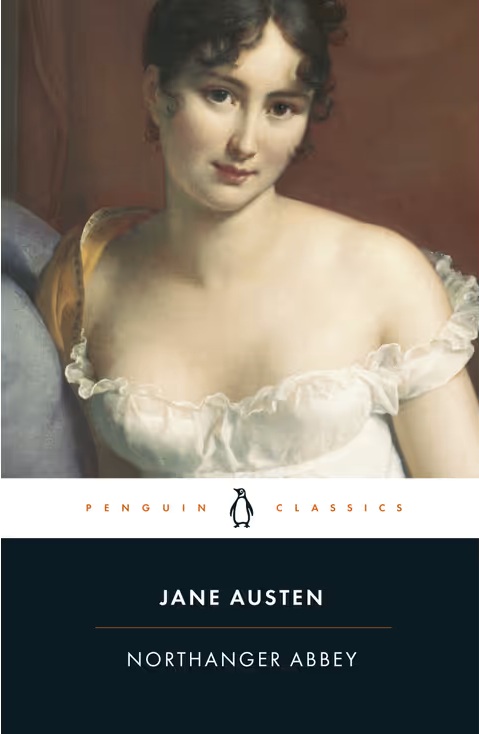
Title: Northanger Abbey
Author: Jane Austen
Written: 1799
Published: 1818 (Posthumously)
Pages: 251
Structure: 31 Chapters in two volumes
Northanger Abbey is a delightful coming-of-age story about a young woman exploring the world of eighteenth-century England. Although it is both comical and satirical, I was surprised at how engaged I became with the heroine.

Catherine Morland is a seventeen-year-old English woman who has spent all of her ordinary life in the rural village of Fullerton in Wiltshire. One of ten children from the family of a clergyman, she eventually receives the opportunity to travel to the city of Bath with some wealthy neighbours, and stay there for three months.
At the start of the novel, Catherine is idealistic, enthusiastic and innocent, but also guided by an instinctive sense of honesty and decency. She loves reading gothic novels such as “The Mysteries of Udolpho” by Ann Radcliffe. She is quickly thrown into the complexities of life in a large town and experiences new friendships and the manipulations of people who try to sabotage those friendships.
We meet characters who are almost polar opposites.
Henry Tilney is a charming and intelligent young man of integrity, who loves reading and is genuinely interested in what Catherine has to say. When they discuss reading novels, he says:
“The person, be it gentleman or lady, who has not pleasure in a good novel, must be intolerably stupid.”
And in relation to Catherine’s favourite book:
“I have read all Mrs. Radcliffe’s works, and most of them with great pleasure.”
Catherine becomes friends with Henry and his equally lovable sister Eleanor.
Henry is contrasted with John Thorpe, a shallow, manipulative braggart who is attracted to Catherine, but who has no time for reading, and is only interested in talking about his own interests:
“Novels are all so full of nonsense and stuff; there has not been a tolerably decent one come out since Tom Jones, except The Monk; I read that t’other day; but as for all the others, they are the stupidest things in creation…
…I never read novels; I have something else to do.”
John is aware of Catherine’s affection for Henry, and tries to sabotage the relationship, telling lies to Catherine and doing everything in his power to keep them apart.
John is assisted by his equally shallow and self-centred sister Isabella who manages to inveigle herself into Catherine’s friendship, and becomes engaged to Catherine’s brother James, falsely believing him to have wealth.
I was surprised by the emotional response I had while reading about the deceitfulness of the Thorpes, and the blatant methods they employed while trying to keep Catherine and Henry apart.
The author is ingenious in this regard. The reader is aware of the shallow selfishness of the Thorpes, and the innocence of Catherine. I am sure many readers, like me, uttered obscenities under their breath while reading about the lengths that John and Isabella go to in order to further their own aims.
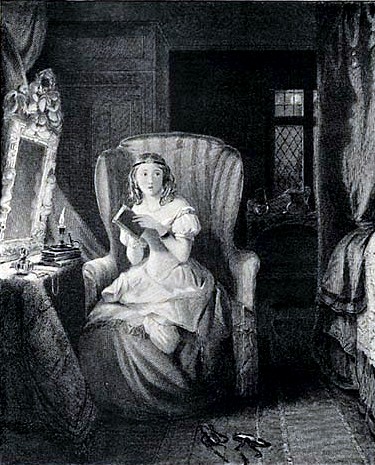
But despite her innocence, Catherine has moral courage, and refuses to do what she knows is rude or selfish. In this she shows herself to be a true heroine – while she is not fully aware of all of the machinations that are happening, she is guided by her own inner knowledge of goodness, and while she still suffers, she prevails.
John Thorpe’s lies have an unintended effect – they falsely convince Henry’s father, General Tilney, that Catherine is an heiress of a huge fortune. This causes General Tilney to encourage the relationship between Henry and Catherine. He invites her to stay with them at their stately family home, Northanger Abbey.
Catherine is delighted. Because of her love of gothic romances, she is fascinated by old castles, and supposes Northanger Abbey to be haunted, and perhaps the scene of a gruesome murder (it is not). The author uses Catherine’s imagination to spoof the whole idea of the stormy haunted castle where unspeakable crimes might have been committed.
Catherine discovers the castle is ordinary. She also fully realises the full extent of Isabella Thorpe’s falseness, when she hears that she has broken off her engagement with James because she has found a “better prospect” in Henry’s brother Frederick.
Just as Catherine begins to hope for a future with Henry, circumstances intervene in a way that tests both their characters.
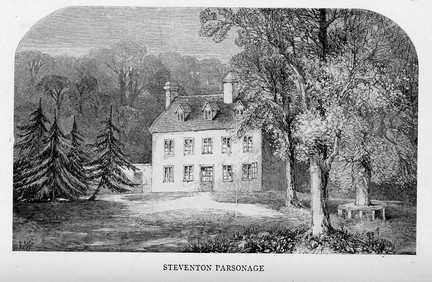
Catherine has learned, through painful experience, how superficial the world can be at times. She returns heartbroken to her parents’ home at Fullerton. But Henry’s own moral courage prevails. He stands up to his father’s superficiality and convinces him to allow Henry to pursue a relationship with Catherine.
On the surface this seems like a simple “boy meets girl” romance. It is anything but.
The novel feels surprisingly modern for a work written at the end of the eighteenth century.
One “hidden” character in the novel is the narrator herself. This is not a bland third-person omniscient narrative. Austen speaks to us, and expresses her opinions. She cracks jokes, and makes sarcastic comments about people. She promotes the benefits of reading. Because of this we are invited into Austen’s confidence. She encourages us to laugh at vanity and pretension, but also reminds us how easily even well-meaning people can misunderstand one another:
“Their joy on this meetings was very great, as well it might, since they had been contented to know nothing of each other for the last fifteen years.”
“talking both together, far more ready to give than to receive information, and each hearing very little what the other said.”
“To look almost pretty is an acquisition of higher delight to a girl who has been looking plain the first fifteen years of her life than a beauty from her cradle can ever receive.”
“He was a very clever young man, as clever as they ever are who can only talk of one thing.”
“her heart was affectionate, her disposition cheerful and open, without conceit or affectation of any kind… her mind about as ignorant and uninformed as the female mind at seventeen usually is.”
Catherine is a genuine heroine. She is not rescued by her knight in shining armour. She is forced to deal with difficult situations while in possession of limited knowledge and experience. All she has to guide her is her own innocent sense of right and wrong. And it’s enough.
The fact that she eventually has a “happily ever after” experience is not because someone came to her aid in her time of need, but because she did the right thing when it mattered most.
But perhaps the most unusual thing about this novel is that it was the first novel that Austen wrote, she sold it to a publisher, but it was never published. She purchased it back after nearly 18 years. But it wasn’t until she died that we gained the opportunity to see into her mind when she was a young author.
This is a short and brilliant novel that can be easily read in a few hours. It’s well worth your time. I am glad I read it.