


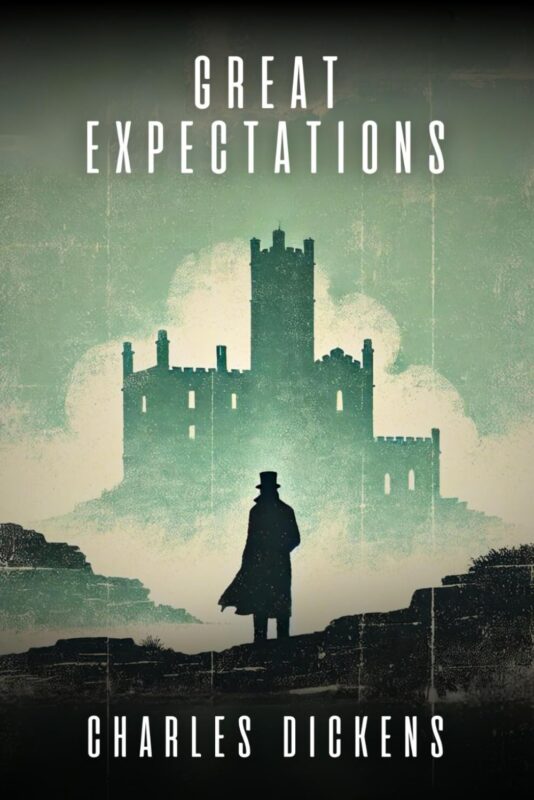
Title: Great Expectations
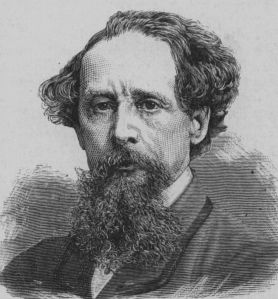
Author: Charles Dickens
First published in book form: 1861
Pages: 672 pages (Barnes & Noble edition)
Structure: 59 chapters in three stages
How do our hopes affect the course of our lives? Can our “Expectations” change who we become? What happens when those hopes are dashed?
Great Expectations answers these questions through Pip, who tells us his life story, from his earliest memories as an orphan living with his sister and her blacksmith husband, Joe, on the North Kent marshes near the mouth of the Thames in nineteenth-century England.
This review contains several plot spoilers.
This wonderful novel has been with us for more than 160 years. I added it to my reading list because I want to read as many great books as I can. Having read it, I think this is one of them.
I am not going to provide a full plot outline. Those are easy to find elsewhere. Instead, I want to explain why I think this is a great book, and how it affected me.
We encounter Pip as an innocent orphan of about seven, visiting his parents’ grave when he is confronted by an escaped convict. We immediately see his vulnerability. Terrified by horrific threats, he returns home, steals some food and a file, and brings them back to the convict.
Fear drives him, but he also feels compassion. He cannot look upon this desperate and dangerous man simply as a monster.
Young Pip reminded me of what it was like to be a vulnerable child, with a limited understanding of the world, but wanting to do the right thing. As children we’re powerless, guileless, and accepting of our circumstances, no matter how humble.
Pip has no expectations for his future beyond eventually becoming apprenticed to Joe and living the same simple life at the forge. He endures the rough discipline he receives from his sister and largely accepts the life laid out for him.
We then see how a series of advancements changes Pip’s attitudes towards himself and others.
He meets the wealthy Miss Havisham and is introduced as a playmate for her beautiful adopted daughter, Estella. Her disdain gives Pip his first painful awareness of social class. He discovers how rough he appears in her sight, and how socially inadequate he believes himself to be.
This changes his feelings towards Joe, his kind-hearted and gentle brother-in-law, who has always had his best interests at heart. Pip has always loved Joe, who reassures him, “you and me is always friends”, but when Joe visits Miss Havisham with him, Pip feels ashamed of Joe’s manners.
Similarly, when Pip discovers that he has a benefactor and that he is to move to London to learn how to be a gentleman, he worries that Joe’s manners are too coarse and asks Biddy to “improve” him:
“Well! Joe is a dear good fellow—in fact, I think he is the dearest fellow that ever lived—but he is rather backward in some things. For instance, Biddy, in his learning and his manners… if I were to remove Joe into a higher sphere, as I shall hope to remove him when I fully come into my property, they would hardly do him justice.”
Like many of us who hope for greater things, Pip allows his expectations of becoming a gentleman and acquiring wealth to change the way he treats those who love him most. They cause him to distance himself from his family, and from the sweet young woman who quietly loves him.
The word “expectations” does not refer only to hope. It also describes the fortune Pip expects to inherit and the social position he believes it will bring him. He mistakes wealth and refinement for moral improvement. In trying to become a better kind of person, he often behaves like a worse one.
The theme is reinforced by the life story of Miss Havisham, who was rejected by the man she loved on her wedding day. Unable to let go of the betrayal, she descends into bitterness.
The clocks in her house are stopped at the moment she discovered the devastating news. She continues to wear her old wedding dress, and only one shoe, since she had not yet put on the other shoe when she learned the bridegroom would not come. The table remains set for a wedding banquet that never happened and is covered with dust and cobwebs.
“The marriage day was fixed, the wedding dresses were bought, the wedding tour was planned out, the wedding guests were invited. The day came, but not the bridegroom.”
Miss Havisham channels her bitterness into the way she raises Estella, teaching her to break men’s hearts. As her story unfolded, I imagined I could hear Dickens warning me about the danger of allowing the dashed hopes of the past to control the present.
This is one of the novel’s most brilliant comparisons. Pip’s life is distorted by what he expects from the future. Miss Havisham’s life is distorted by what she cannot release from the past.
Estella is perhaps the most tragic example of all. Pip builds his hopes for happiness around her, imagining that becoming a gentleman will make him worthy of her love. But Estella has been shaped by Miss Havisham’s own disappointed hopes. She has been raised to break men’s hearts, and taught to suppress tenderness in herself. Pip expects her to become the fulfilment of his ambitions, while Miss Havisham expects her to become the instrument of her revenge. Neither of them initially sees Estella as a person with hopes and injuries of her own.
Along the way, we meet other characters whose lives are shaped by rank, aspiration and self-importance. Mrs Pocket was brought up to expect that she would marry into the nobility and remains almost entirely detached from ordinary domestic life. Bentley Drummle is “idle, proud, niggardly, reserved, and suspicious,” but has the advantage of wealth and the expectation of a baronetcy.
The brilliance of the characters Dickens creates is that they’re familiar to us. They remind us of people we know. Sometimes they remind us of ourselves, and we’re confronted by our own shortcomings.
But we also see goodness in people such as Herbert Pocket, Pip’s constant friend; John Wemmick, the legal clerk whose private kindness survives beneath his hard professional exterior; and Abel Magwitch, the convict whose gratitude towards Pip becomes one of the great forces in the story.
Above all, there is Joe. He is uneducated and socially awkward, but he possesses the gentleness, loyalty and moral strength that Pip fails, for much of the novel, to recognise as true gentility.
These people are also familiar to us. Most of us have encountered this kind of goodness in our own lives, although we may not always have recognised its value at the time.
And we meet the brilliant lawyer Jaggers. He is presented more as an irresistible force than as a mere person. The walls of his office carry grease stains from the shoulders of people who have stood in his office seeking legal help – they are almost ghostly in their symbolism.
On a shelf are death masks of two executed criminals. When Pip encounters them, they seem to take on a life of their own. We see Jaggers performing in court and dealing with clients. He is severe, shrewd, and feared, and at times seems almost supernatural.
Alongside the characters is the landscape itself. Dickens masterfully shows us the misty marshes near the Thames, dirty and gritty London, the blood and filth of Smithfield Market, Newgate Prison and its gallows, the moody river itself, and the dingy apartments in which many of the characters live.
These places reflect Pip’s changing view of the world. He imagines London as the home of gentility and advancement, only to discover ugliness, debt, crime and decay. The marshes he wishes to escape eventually come to represent honesty and home.
Dickens gradually shows us how the stories he has been weaving are intertwined, and how the characters are more closely connected than we realised. Then he shows us, almost in slow motion, what happens as hopes are dashed, dreams turn to dust and the great expectations on which everything seemed to depend finally evaporate.
What is left when these things desert us? On whom can we rely when our fortunes are gone?
When Pip’s friends help him at the time he needs them most, Dickens seems to suggest that friendship, loyalty and the love of those close to us are more dependable than fortune or social advancement.
That was the part of the novel that most affected me. It reminded me how easily the hope of becoming something greater can make us ashamed of the people who already love us, and how often the qualities that matter most are found in people whom society does not consider important.
The ending is ambiguous. Dickens gives us no simple “happily ever after.” Great Expectations is a portrayal of life, not a fairy tale. Its questions about hope, class, shame, gratitude and love are as relevant now as they were in nineteenth-century England.