Title: How to Love the World
Author: Ilka Tampke
Published: 2026
Pages: 336
Structure: 45 chapters in two parts
A large branch falls on a woman walking alone in the Australian bush and pins her to the ground. Seriously injured, in pain and unsure whether she will survive, she lies there over the course of a day while her life passes before her. She is forced to confront the question: “Why should you live?”
How to Love the World is a life-affirming modern Australian novel that explores relationships, our place in the world and the purpose we find in living. I found it compelling on several levels.
The story opens abruptly with a terrible accident. We experience what it might be like to be knocked to the ground by a huge falling branch. There is no warning. You do not even have time to think, “Oh dear, a branch is falling.” There is only the immediate violence of the event:
Belly-down, cheek jammed against dirt, trunks horizontal, the track’s edge a disorienting vertical. She had opened her eyes to the world on its side. There was grit in her mouth; the air was blurry with dust that had plumed in the impact. She’d been struck from behind. Someone was holding her down with a knee on her spine…
I love this approach. It feels realistic: first disorientation, then alarm. Am I injured? How do I get out of here? And then the pain.
As I read, the novel became an almost virtual-reality experience for me. I was trapped under the branch. I felt the pain. I became the protagonist as her mind returned to earlier memories of relationships, conflicts and childhood.
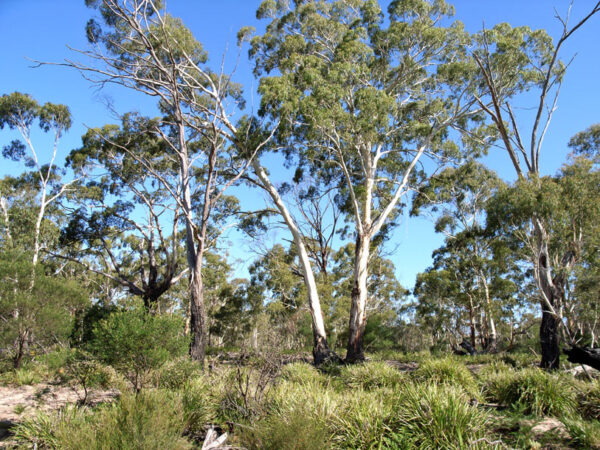
Like anyone who has walked through an Australian eucalypt forest, I could vividly picture the landscape Tampke evokes:
The mist revealed the pathways of light streaming from the sun like spokes of a wheel, split by the trunks and caught by the fine droplets in the air, so that the thickness of the space was made visible, a soup of water and light.
That vividness extends to Nellika’s memories of her joys and conflicts with her parents, children and peers. She recalls holding her baby as she “presses her face into his warm cheek, drinks in the curdled scent of innocence and worry”. Tampke also captures scenes of conflict with Nellika’s teenage children, who sometimes treat her with contempt, their wounded looks telling her what a horrible person she is. We share her powerlessness as a child when a boy bullies her at school and her father does nothing about it.
The magic of this novel is that, while it follows the passage of a single day, it allows us to inhabit an entire life. Through the images that flash through Nellika’s mind as she endures the agony of being trapped and grows desperately thirsty in the sun, we follow her from infancy through childhood, adolescence, young adulthood and parenthood.
One of the most powerful scenes for me occurs when Nellika attends a women’s retreat and takes part in a guided exercise. She first considers what it is like to inhabit her own body. She then steps back and imagines inhabiting her mother’s body and experiencing her life, before stepping back once more into the body of her grandmother.
For me, this expresses the idea that we are more than isolated individuals. We come from a long line of ancestors extending back into the mists of time, and they are all part of us.
She has never known herself in this way before: as one identity existing over time, as a multi-generational being. Her own life seems suddenly less significant—just one part of a bigger story.
For me, the mark of a great novel is whether it changes the way we see ourselves and the world. It contains a spark that we carry away after closing it, something that alters who we are.
I think How to Love the World is such a novel. The narrative is easy to read. It is vivid without being dense. Its goodness is like ripe fruit: readily available, but no less nourishing.
This is a book for anyone who loves walking in forests, who is a parent, or who carries pain from childhood.
I am glad I read it and thoroughly recommend it.