


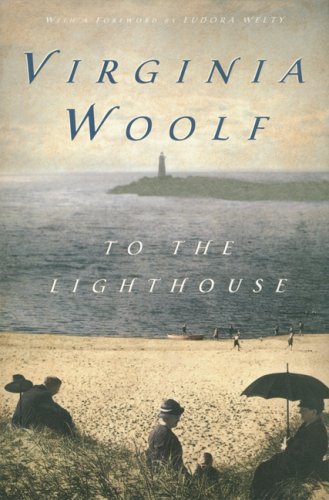
Title: To the Lighthouse
Author: Virginia Woolf
Published: 1927
Pages: 209 pages (Harcourt edition)
Structure: 42 chapters in three parts
On the surface, this novel describes a simple event: a trip to a lighthouse which is postponed, and then finally undertaken ten years later. But it is a rich experience which allows us to inhabit the thoughts and feelings of several different people over that period. I was surprised by how immersive that experience was.
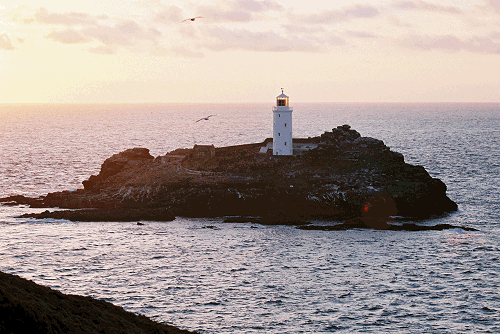
The story is divided into three parts.
“The Window” introduces the family and their friends. We hear about the proposed trip to the lighthouse and why it can’t go ahead. We experience people living in close proximity in a holiday house, going for walks, preparing for dinner, and painting pictures. We also experience the conflicts they have with each other.
“Time Passes” describes a decade passing from the perspective of the house. We see it falling into disrepair, servants trying to maintain it, and hear, incidentally, of all the deaths and other misfortunes of some of the protagonists.
Finally, “The Lighthouse” describes the family’s return to the house ten years later, and describes the eventual trip to the lighthouse from several different perspectives.
As I began reading the first part of this novel, the experience was not simply a matter of following the events of a story. It was something much deeper. Woolf showed me what it was like to be a mother who cared for both her six-year-old son and her husband, and how it felt to see the child she loved disappointed by the man she loved.
the monotonous fall of the waves on the beach, which for the most part beat a measured and soothing tattoo to her thoughts and seemed consolingly to repeat over and over again as she sat with the children the words of some old cradle song, murmured by nature, “I am guarding you—I am your support,” but at other times suddenly and unexpectedly, especially when her mind raised itself slightly from the task actually in hand, had no such kindly meaning, but like a ghostly roll of drums remorselessly beat the measure of life, made one think of the destruction of the island and its engulfment in the sea, and warned her whose day had slipped past in one quick doing after another that it was all ephemeral as a rainbow…
She helped me feel the anxiety of a young artist attempting to paint a portrait of a mother and child while a contemptuous young man looked over her shoulder and dismissed her ability to paint.
And it would never be seen; never be hung even, and there was Mr. Tansley whispering in her ear, “Women can’t paint, women can’t write …”
And she vividly describes what it felt like to be an ageing philosopher and author uncertain about his life’s work and his place in the affections of his family and in the world.
Mr. Ramsay repeated, never taking his eyes from her face, that he was a failure… It was sympathy he wanted, to be assured of his genius, first of all, and then to be taken within the circle of life, warmed and soothed, to have his senses restored to him, his barrenness made fertile, and all the rooms of the house made full of life—the drawing-room; behind the drawing-room the kitchen; above the kitchen the bedrooms; and beyond them the nurseries; they must be furnished, they must be filled with life.
For me, the first part of this novel felt like a series of scenes in which we inhabited the minds of the characters while they experienced the everyday conflicts of family life.
In the second part, Woolf gives us the feeling of being a ghost inhabiting the house, and watching ten years quickly pass. We see it fall into disrepair. It is at this time that the First World War starts, and the turmoil of those times is reflected in the climate that surrounds the house:
The nights now are full of wind and destruction; the trees plunge and bend and their leaves fly helter skelter until the lawn is plastered with them and they lie packed in gutters and choke rain-pipes and scatter damp paths.
During this section of the novel, while we’re watching the house decay, Woolf inserts short comments in brackets which describe important events. Someone dies suddenly, someone else is married and later dies, and a young man is killed in battle.
All these events are described with and almost shocking nonchalance – as though our deaths are merely incidental and of no consequence when viewed from the perspective of passing time.
Night after night, summer and winter, the torment of storms, the arrow-like stillness of fine weather, held their court without interference. Listening (had there been anyone to listen) from the upper rooms of the empty house only gigantic chaos streaked with lightning could have been heard tumbling and tossing, as the winds and waves disported themselves like the amorphous bulks of leviathans whose brows are pierced by no light of reason, and mounted one on top of another, and lunged and plunged in the darkness or the daylight (for night and day, month and year ran shapelessly together)
As we reach the third part of the novel, the rhythm changes again. We again experience the inner feelings of the characters, but this time they are shaped by memory and hindsight. Woolf does this so subtly it can easily be missed.
Mr Ramsay is a widower, having lost his wife several years earlier. He is still as insecure and just as needy as he was before. We see his uncertainty in the way he interacts with his children, and in the way he lingers around the artist, Lily Briscoe, hoping to elicit some sympathy from her.
Lily Briscoe, who was so anxious earlier in the book, now seems more capable of protecting the space she needs for herself and her work. When Ramsay interrupts her painting, she resists his demand for sympathy, suppresses her instinct to comfort him, and finally diverts him by praising his boots before returning to her painting.
Ramsay’s son, James, who was a disappointed six-year-old when his father destroyed his hopes of visiting the lighthouse, is now a teenager who hates his father. He and his sister, Cam, resist any efforts by Ramsay to connect with them emotionally.
They must walk behind him carrying brown paper parcels. But they vowed, in silence, as they walked, to stand by each other and carry out the great compact—to resist tyranny to the death. So there they would sit, one at one end of the boat, one at the other, in silence.
As the story draws to a close, we see James and Cam with ambiguous feelings for their father as they approach the lighthouse in a boat. Then we see the scene from Lily’s perspective as she watches the ocean, realising that the Ramsays have probably reached the lighthouse. She then completes her painting and is satisfied with it.
As I closed the book, I realised that if I look at the story from the perspective of plot, nothing much happens. That is not the aim of this novel. For me, the true value of Woolf’s work is the rich experience of the characters’ perspectives. Like a spectre, we dip into their minds, we witness their conflicts, then we see time rush by before once again delving into their inner thoughts.
It’s a strange experience. For several hours, I knew what it was like to be an anxious artist on the Isle of Skye in the early twentieth century. I got to feel the frustration of being a mother and wife to a needy, insecure man. I was able to experience the rage of a six-year-old whose father has no understanding of the intense feelings that go along with childhood.
And I was able to see how fleeting is the passage of time.
For some people, a sequence of events is the mark of a good book. Woolf has turned all that on its head for me. Reading this book is almost a hallucinogenic experience.
If you read it, I suggest that you patiently surrender to the imagery and vicariously experience life and the passage of time on a Scottish island in the early twentieth century.